Power where the grid
can't reach.
An off-grid solar system operates independently of the electricity grid. Instead of falling back on the grid when solar production stops, it stores the day's energy in batteries and supplies power when you need it — useful where grid electricity is unavailable, unreliable, or simply not suitable.
A complete system that stands on its own.
During the day your solar panels generate electricity. Your appliances use what they need, and surplus energy is stored in the batteries. At night, or during periods of low sunlight, the stored battery energy powers your appliances.
That independence is the point — and it's why sizing matters more here than on any other kind of solar system.
Surplus daytime generation charges the battery. After sunset the battery carries your loads — which is exactly why battery capacity, not panel count, drives an off-grid project's cost.
Off-grid isn't automatically the best option for everyone.
It makes the most sense when you need independent power generation and energy storage.
Remote Homes & Farmhouses
Properties where grid electricity is unavailable or difficult to connect.
Rural Properties
Locations where electricity supply may be limited or unreliable.
Agricultural Applications
Systems designed for specific agricultural and pumping requirements.
Remote Commercial Sites
Warehouses, offices, telecom sites and locations without reliable grid access.
Backup-Critical Applications
Where maintaining power to selected loads is particularly important.
Construction & Temporary Sites
Where permanent grid infrastructure may not yet be available.
Remote Infrastructure
Lighting, pumps and other decentralised applications can also use standalone solar solutions.
Not sure if it fits?
Tell us what you need to power and we'll tell you honestly.
The process is straightforward.
Solar Panels Generate Electricity
Panels convert sunlight into DC electricity.
The Controller Manages the Energy
The system controls how electricity is supplied to your appliances and how excess energy is sent to the battery.
Batteries Store Excess Electricity
When generation is higher than immediate consumption, surplus electricity is stored.
Stored Energy Powers Your Loads
When solar production is low or unavailable, the battery supplies electricity to connected loads.
The System Manages Itself
The inverter and control system continuously manage generation, battery charging/discharging and power delivery per the system design.
In simple terms
Sunlight → Solar Panels → Electricity → Your Appliances
Extra Solar → Battery → Electricity Later
How much power do you actually need?
You don't size an off-grid system from your monthly bill. You size it from what you run, how long you run it, and how long you need it to work without sunlight. Adjust the loads below.
1. How much backup do you need?
Days of autonomy — how long the system should carry your loads without useful sunlight.
2. What do you need to run?
Set the quantity and typical daily running hours for each load.
Refrigerator energy varies because the compressor cycles on and off. Pumps, motors and air conditioners also have starting characteristics that affect inverter selection — which is why a final design always follows a proper load assessment.
Planning estimate only. Actual system size and price depend on panel and inverter specifications, battery chemistry and usable capacity, mounting structure, electrical work, site conditions, protections and other project requirements. Battery cost is typically the largest single variable.
The battery is what carries you through the dark half.
By day the array runs the house and charges the bank. After sunset there is no generation at all — everything comes out of storage.
The array runs the house first. Whatever is left over charges the battery — which is why a system sized only on your daily total can still fall short if most of your use is after dark.
Generation is zero. Everything the house draws now comes out of the battery, and it has to last until the sun comes back.
What's actually in an off-grid system
Solar Panels
The primary source of energy. They convert sunlight into electrical energy that can be used immediately or stored.
Solar Inverter
One of the most important components. It manages conversion and delivery of electricity between panels, batteries and your appliances — selected on load, system capacity, battery configuration and operating requirements.
Battery Bank
Stores energy generated by the panels. Capacity determines how much energy can be stored and used when generation is unavailable.
Charge Controller
Manages electricity flowing from the array to the batteries. Modern systems may integrate charge-control functions into the inverter.
Mounting Structure
Panels need a properly engineered structure suited to the installation site.
Cables & Electrical Protection
Appropriately sized cables, isolators, protection devices and earthing. These are critical to the safety and reliability of the installation.
Monitoring System
Depending on the equipment selected, the system can report on:
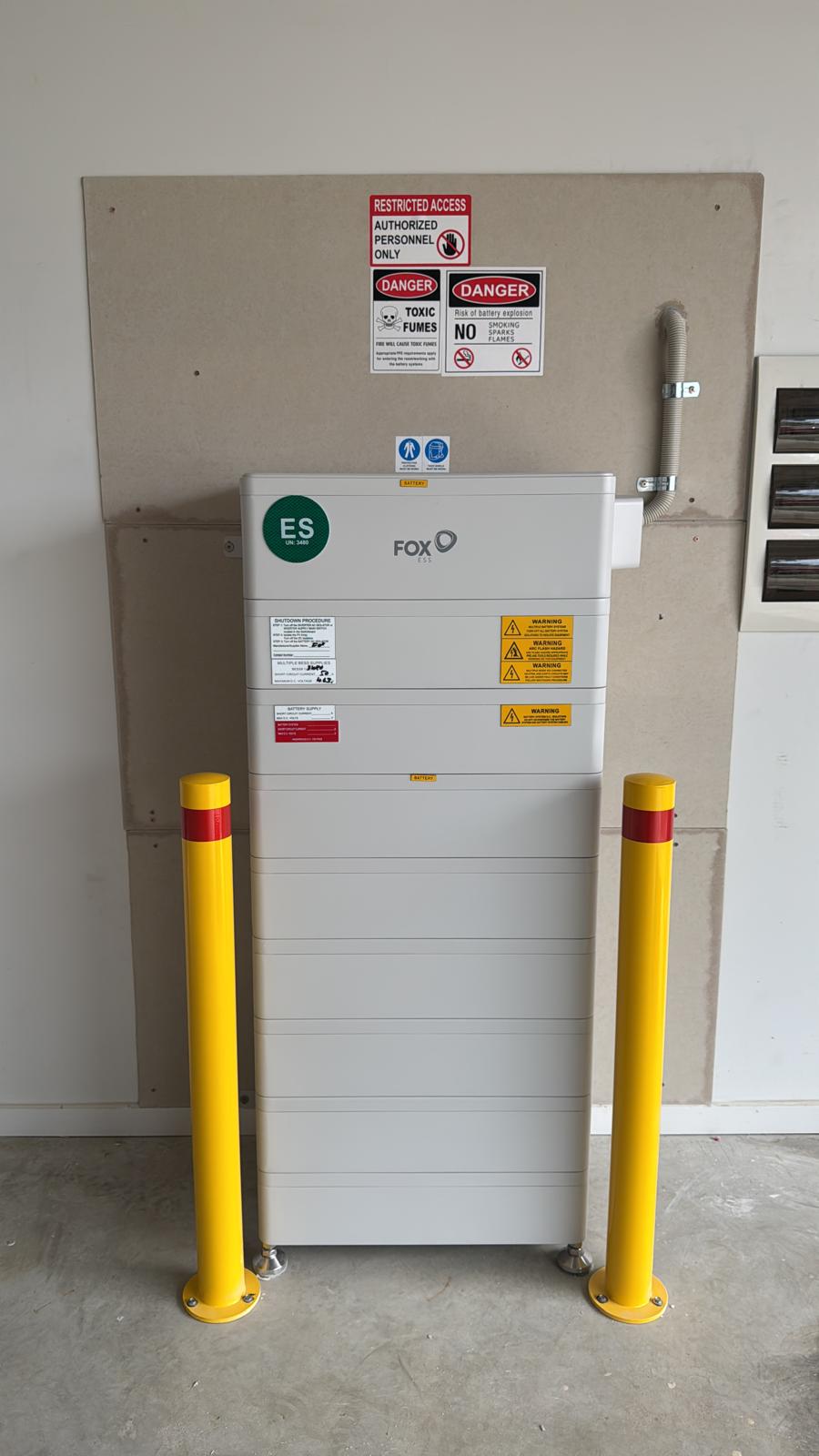
The battery is the part that decides everything.
Capacity, chemistry, ventilation, protection and where the bank actually lives on your property — all of it gets designed before a single panel goes up.
There is no single off-grid solar price.
Cost depends heavily on the solar capacity and — particularly — the amount and type of battery storage required. The same panel capacity can carry a very different total project cost depending on the backup duration.
| System size | Typical application | Approximate project range |
|---|---|---|
| 1 kW | Small home / essential loads | ₹1.5 – 2.5 lakh |
| 2 kW | Small home / backup loads | ₹2.5 – 4 lakh |
| 3 kW | Home / farmhouse | ₹3.5 – 5.5 lakh |
| 5 kW | Larger home / farmhouse | ₹5 – 8 lakh |
| 10 kW | Larger property / commercial | ₹9 – 14 lakh |
| 20 kW+ | Commercial / industrial | Project-specific |
These are indicative planning ranges, not fixed Archer Solar prices. Actual pricing depends on panel and inverter specifications, battery chemistry and capacity, mounting structure, electrical work, installation conditions, protections and other project requirements. For off-grid systems, battery cost can be a major part of the overall investment — so rather than quoting a generic ₹/kW price, we calculate the system from your actual loads and required backup.
Solar Capacity
More electricity consumption generally requires more generation capacity.
Battery Capacity
A system requiring several hours or days of backup needs significantly more storage.
Battery Technology
Different chemistries have different costs, usable capacity, operating characteristics and expected lifespans.
Inverter Capacity
The inverter must handle continuous load and, where applicable, starting/surge loads from pumps, motors and compressors.
Installation Conditions
Roof type, mounting requirements, cable distances and site accessibility affect installation cost.
Electrical Requirements
Larger or more complex installations may need additional protection, distribution equipment and electrical work.
A 10 kWh battery does not give you 10 kWh.
Usable capacity depends on the battery technology and the manufacturer's recommended operating limits. This is the single most misunderstood number in off-grid solar.
Required battery capacity = Energy required ÷ usable fraction ÷ system efficiency
Suppose your essential loads need roughly 10 kWh per day and you want about one day of autonomy. You cannot simply specify a 10 kWh battery and assume you have 10 kWh of usable energy.
A professional design also considers:
Which is why battery sizing should be done from your actual load profile — not by choosing a battery based only on its advertised kWh rating.
Can it run my AC? My pump? What about cloudy weather?
Can it run an air conditioner?
Yes — but the system must be designed for it. Air conditioners consume significant energy and may have substantial starting or transient requirements. We consider AC capacity + operating hours + inverter capacity + battery capacity + solar generation + your other loads. Multiple ACs or long operating hours make the required system significantly larger.
Can it run a water pump?
Yes. However, pumps and other motors can have high starting currents. The inverter must be sized for both the pump's normal operating power and its starting characteristics — particularly important for agricultural and farmhouse applications.
What about cloudy or rainy weather?
Panels still generate during cloudy weather, but output is normally lower. Because an off-grid system depends on stored energy, it must be designed with expected weather and solar availability in mind. We design around your required reliability — not just an ideal sunny day.
Advantages Off-Grid
- Energy independence. You aren't dependent on the grid for your supply.
- Works where grid power isn't available. Electricity in locations where conventional infrastructure isn't practical.
- Power during grid outages, for the loads and duration your system is designed to support.
- Lower dependence on diesel in suitable applications.
- Customisable around your specific appliances and requirements.
Disadvantages
- Higher initial investment. Battery storage adds substantially to upfront cost versus a basic grid-connected system.
- Battery replacement. Batteries have a finite service life and will eventually need replacing.
- Limited stored energy. If the battery is depleted and generation is insufficient, available power becomes limited without another backup source.
- More complex design. Correct sizing of array, inverter and battery is essential.
- Higher cost for heavy loads. Large ACs, pumps and motors require substantially larger solar and battery systems.
Off-grid vs on-grid solar
| Off-Grid | On-Grid | |
|---|---|---|
| Grid connection | Not required | Required |
| Battery | Required | Usually not required |
| Backup during grid outage | Yes* | Usually no |
| Initial cost | Higher | Lower |
| Energy independence | High | Lower |
| Battery replacement | Required | Usually not applicable |
| Best for | Remote / unreliable-grid sites | Homes & businesses with reliable grid access |
*Only for the loads and duration supported by the designed battery and inverter system.
Choose Off-Grid if Independence
- Your property has no reliable grid connection
- You need independent electricity
- Power outages are a major problem
- You need solar power at a remote location
- You want battery-backed electricity
Consider On-Grid or Hybrid if
- Your property already has a reliable grid connection
- Your primary objective is reducing electricity bills
- You don't need full energy independence
- You want to reduce the upfront investment in batteries
Off-grid solar installation process
Understand Your Requirements
We discuss your property, appliances, operating hours and backup expectations.
Load Assessment
We determine how much electricity your appliances actually require.
Site Survey
We assess the available installation area, shading, orientation, roof/ground conditions and electrical requirements.
System Design
We determine the complete system.
Detailed Proposal
You receive a proposal explaining the system, equipment, expected generation, battery storage, project cost and installation requirements.
Installation
Our team installs the solar panels, mounting structures, inverter, batteries and electrical systems.
Testing
We test the system and verify its operation and safety.
Commissioning
The system is commissioned and your selected loads begin operating from your solar and battery system.
Why choose Archer Solar for off-grid?
Designed Around Your Actual Loads
We don't sell you a standard package without understanding what you need to power.
Correct Battery Sizing
Battery capacity is critical in an off-grid system. We design storage around your energy requirements and desired backup.
Strong Installation
We focus on proper mounting structures, electrical connections and installation quality.
Quality Components
We select components based on the project's technical requirements rather than simply choosing the cheapest option.
Complete System
Panels, inverter, batteries, mounting, protection and electrical integration designed as one system.
Professional Support
From initial assessment through installation and ongoing support, Archer Solar stays involved throughout the project.
Frequently asked questions
Need power where the grid can't reach?
Tell us what you need to power, where you need it and how much backup you require. Archer Solar will design an off-grid system around your actual requirements.
Get Your Off-Grid Solar Quote
Our team will review your loads and backup requirement, then come back with a project-specific design.
Thanks — we've got your requirements.
Our team will call you to complete the load assessment and design your system. For anything urgent, call 1800 203 7191.
Designed around your loads. Not a catalogue.
Off-grid works when the sizing is right. Tell us what you need to run and for how long, and we'll design the system that actually does it.